From Wastelands to Neighborhoods: How Empathic Development Revives Brownfield Sites
published April 25th, 2026
Brownfield sites are parcels of land where past activity has left the land polluted and now unused. There are thousands of these former industrial sites across North America, they are often centrally located, and they represent an enormous opportunity for re-imagination and redevelopment.
Recent initiatives, like MIT urban planning students' work in Cleveland's industrial corridors and Orange County's recent Brownfields Revitalization tour, highlight a growing movement to transform these eyesores into thriving neighborhoods. Landlab defines this approach as Empathic Development—designing for the people who will live, work, and play in these spaces with the understanding that profit flows from good design.
Brownfields are more than environmental hazards; they're economic dead zones. Cleanup costs often exceed the land value and thus they lay dormant. In the U.S. alone, there are over 450,000 such sites, costing communities billions of dollars in lost tax revenue and blight-related property value declines.
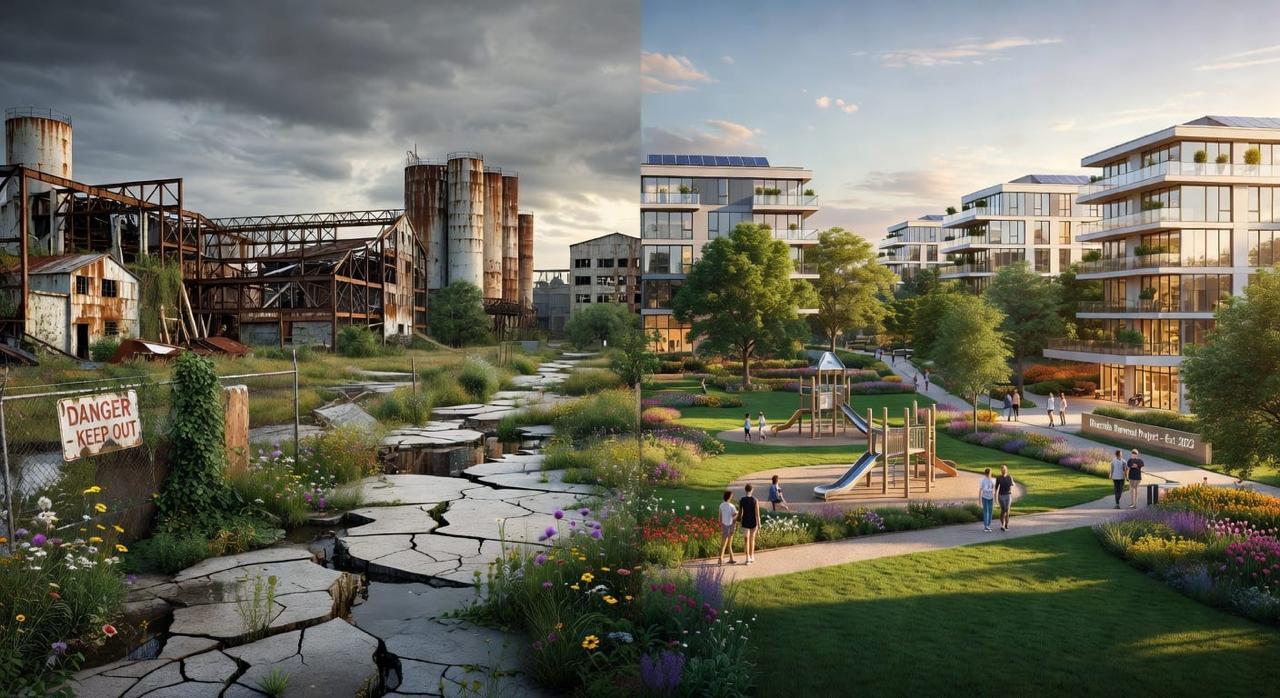
Birmingham, Alabama recently secured federal grants to assess and redevelop old industrial sites. Cadillac, Michigan's Lofts project, has turned a brownfield into housing with completion slated for late 2026. These efforts address a growing understanding that brownfields represent a great opportunity for communities and a means of addressing pressing needs like housing shortages and job creation.
By applying the principles of Empathic Development to such sites, 'abandoned industrial' becomes 'thriving neighborhood' and the community reaps the reward.
The Spring District project in Bellevue, Washington, integrates office, residential, retail, dining, educational, and open-space uses to support approximately 2,000 residents and 13,000 workers upon full build-out, with a total planned leasable area of approximately 5.3 million square feet across 24 buildings ranging from three to 12 stories.
Despite the obvious benefits to their communities, brownfield re-developments often face a substantial list of challenges. Regulatory barriers, funding gaps and NIMBY opposition often ironically make such developments difficult even though pursuit of the redevelopment would dramatically increase local property values and enrich local governments.
Brownfield sites are often a stark reminder that outdated zoning regulations prevent better uses of sites and act as a hindrance to doing real environmental and community good. Brownfields aren't liabilities—they're blank canvases that can make better cities. By embracing Empathic Development, we can turn wastelands into neighborhoods where people thrive.